Envisioning a successful fashion business without compromising on ecology and ethics is a major challenge in today’s fast-paced world. However, British designer Katy Chambers managed to achieve exactly that in one of the most dynamic markets on earth – Hong Kong. Inspired by the natural materials of Crete, she founded Anaphe, a brand that brings premium, sustainable, and even “toddler-proof” Mulberry silk to women’s wardrobes worldwide.
How does Hong Kong’s fierce business energy compare to the European market? Why is this Asian hub the ideal launching pad for global expansion, and how can an overseas founder manage local regulations and bureaucracy remotely without the stress?
In this candid interview, Katy shares not only her sources of design inspiration but also why her strategic partnership with Startupr was a crucial step that allowed her to bypass paperwork and focus entirely on design, quality, and the growth of her brand.
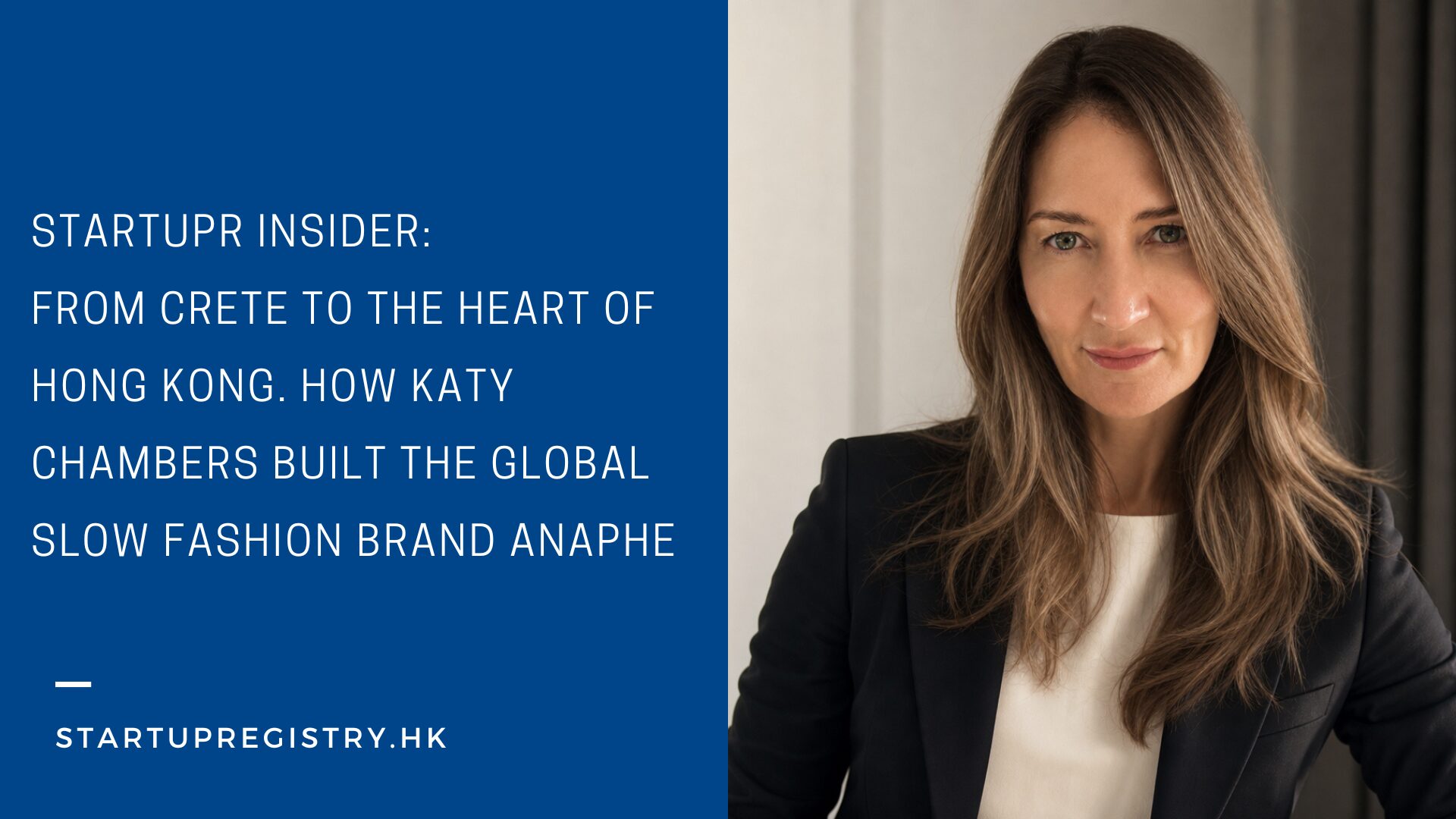
Katy, can you tell us a bit about your story? Where are you from, and what made you choose Hong Kong to start your business?
I grew up between Crete and the UK, where I was inspired by the way clothing is approached in Crete. Sustainable, locally grown cotton and natural, breathable fabrics are part of everyday life.
This philosophy became the foundation of Anaphe. I wanted to create pieces that are stylish, functional, and feel beautiful on your skin while also being biodegradable and kind to the environment. We work exclusively with natural silk sourced from an ethical farm committed to responsible craftsmanship.
While working in Hong Kong, I struggled to find natural, high-quality fabrics at an accessible price. Researching traditional textiles led me to discover that silk has been cherished for thousands of years. That heritage inspired me to create timeless garments that honor tradition and are designed to be loved and worn for years to come.
How does the business energy in Hong Kong compare to other big cities you’ve visited? What do you think is the biggest advantage of being here?
The business energy in Hong Kong feels very different from places like London or other European cities. It’s faster, denser, and much more focused. Everything moves quickly, and decisions tend to happen without much delay. London feels more conversational and relationship-led, with time to build connections. In comparison, Hong Kong is much more immediate and performance-driven.
The biggest advantage of being in Hong Kong is access. Hong Kong sits right at the crossroads of heritage manufacturing and global luxury supply chains. You’re close to some of the best textile networks in the world, including silk. It was important to me to actually feel the materials and see the craftsmanship directly rather than through layers of intermediaries. That mix of tradition, infrastructure, and global trade made it an incredible place to research, source, and really understand fabrics at a deeper level than most cities allow.
Many people are nervous about starting a business abroad. How was your experience as an overseas founder when you opened your first shop here?
I was able to test the market before committing to a store. We did pop-ups and found people were very open and welcoming to new brands and ideas. It also gave me the chance to network with other business owners, which helped me understand the industry more deeply and refine my thinking. Most importantly, it gave me clarity on where to eventually locate my store and what kind of space and customer base would be the right fit.
Anaphe is all about “slow fashion” and quality. Why did you choose Mulberry silk as your primary material, and how do customers in Hong Kong respond to this philosophy?
It’s breathable, natural, and perfect for creating timeless pieces. Contrary to popular belief, it’s incredibly durable. I wanted pieces people could wear every day without worrying about snags or tears. I even have a two-year-old daughter, so I can honestly say it’s surprisingly toddler-proof.
But most of all, I wanted these pieces to stand the test of time. I’m excited to one day pass them down to my daughter, knowing they still hold meaning and quality. When they do eventually reach the end of their life, they will biodegrade naturally rather than ending up in landfill.
You have a beautiful shop in PMQ, Central. How would you describe a “Hong Kong customer”? Are they different from customers in Europe or the US?
Honestly, there isn’t a huge difference. My customers tend to be very aligned in their values. They’re drawn to Anaphe because they already believe fashion should be slow, intentional, and sustainable. They care about quality, not quantity, and they want pieces that last, feel good to wear, and have a lower impact on the environment.
It feels less like I’m “selling” to them and more like I’m speaking to people who already understand and share the same mindset around how clothing should be made and worn.
You focus heavily on ethics and fair wages. Is it difficult to maintain these high standards in such a fast-paced market like Hong Kong?
I think it’s really important that people are fairly compensated for their time and craftsmanship. That’s something I’ve always been clear on and unwilling to compromise. For me, it comes down to integrity, both personally and for the brand. I would never choose a cheaper option if it meant undermining the people making the pieces or the values Anaphe is built on.
I feel that ethos really comes through in the pieces themselves. The designs are made with comfort at the core, French seams to avoid irritation against the skin, and carefully considered construction so nothing feels harsh or restrictive when worn. Even small details, like placing labels horizontally around the waistband, are intentional so they don’t rub, distract, or show through the silk.
These are the kinds of decisions that only come from working closely with skilled craftsmanship, where attention to detail and respect for the wearer are equally valued.
Your collections look amazing. Where in Hong Kong do you find the most inspiration for your designs?
If I’m speaking about Hong Kong specifically, the inspiration tends to come from contrast more than one single place.
A lot of it is in the everyday movement of the city, Central at rush hour, where everything feels structured, sharp, and fast. There’s something quite powerful about that level of discipline and pace. Then just a short distance away, you have places like Sheung Wan, where you still see traditional shops, fabrics, dried goods, old signage; there’s a slower layer of history sitting underneath the modern city.
The textile and fabric districts are incredibly inspiring, especially when you’re working with silk. Being able to physically see materials, touch them, compare weights, finishes, and understand how they behave in real life gives you a completely different level of creativity.
Then there’s the quieter side, walking along the harbour or going up into the hills. That’s often where ideas actually settle. The city is so intense that the distance and silence almost become part of the creative process.
You set up your company through Startupr. Looking back, how did this help you at the beginning, especially when managing things from overseas?
Startupr made the early setup extremely easy. It handled the registration and admin, so I didn’t have to; it saved a lot of time and stress.
Startupr has a great backend system to keep everything organised, allowing me to focus on building the business instead of chasing paperwork.
At Startupr, we love using digital tools to make things faster. How was your experience with us in terms of speed and ease of managing your company?
The platform made it quick to set everything up and easy to manage day-to-day, even while I wasn’t in the same country, traveling for shows and events.
It reduced a lot of back-and-forth and meant I could handle most things digitally without delays.
Some founders are afraid of the paperwork in Hong Kong. What advice would you give to other overseas entrepreneurs who are thinking about moving here?
The paperwork in Hong Kong is less intimidating when you have a good business partner; I 100% recommend Startupr.
What is next for Anaphe? Do you plan to use Hong Kong as a bridge to other Asian markets?
We started as D2C and tested all of our products in person, meeting our customers, asking for their preferences, and making small changes to perfect our designs. That has paved the way for a successful wholesale expansion.
This year we launched into the USA wholesale market and have over 150 stockists now in the USA alone. Our next wholesale expansion is focused on the Asian market.
Having Hong Kong as a base is very much part of the strategy, particularly as a bridge into other markets. Its position makes it a strong hub for expanding distribution and building regional partnerships.
The story of Katy Chambers and her brand, Anaphe, is clear proof that the barriers to starting a business abroad often exist only in our minds. With its speed, strategic location, and seamless access to top-tier global supply chains, Hong Kong remains one of the best locations for ambitious entrepreneurs. And as Katy herself confirms, having the right partner to handle corporate administration can completely free your hands.
At Startupr, we are proud to serve as the digital backbone for visionaries who are changing the world, whether through sustainable fashion, tech, or retail. Our platform takes full responsibility for company registration and paperwork, allowing you to scale, expand into new markets (such as Asia or the US), and focus on what you truly love.
Inspired by Anaphe’s journey? Step onto the global market with confidence. We are here to simplify every step of your entrepreneurial path.