Launching a business in Hong Kong is famously fast and straightforward, but getting off the ground is only half the battle. Once your doors are open, navigating regulatory requirements, mitigating operational risks, and securing the right financial safety net become critical for long-term survival.
To dive deep into what founders need to know about protecting their ventures, we sat down with Michael Lamb, Marketing Director at CCW Global. With nearly two decades of experience in Asia’s insurance industry, Michael shares expert insights on everything from mandatory employee coverage and cargo protection to emerging cyber threats and why human expertise still beats AI when disaster strikes.
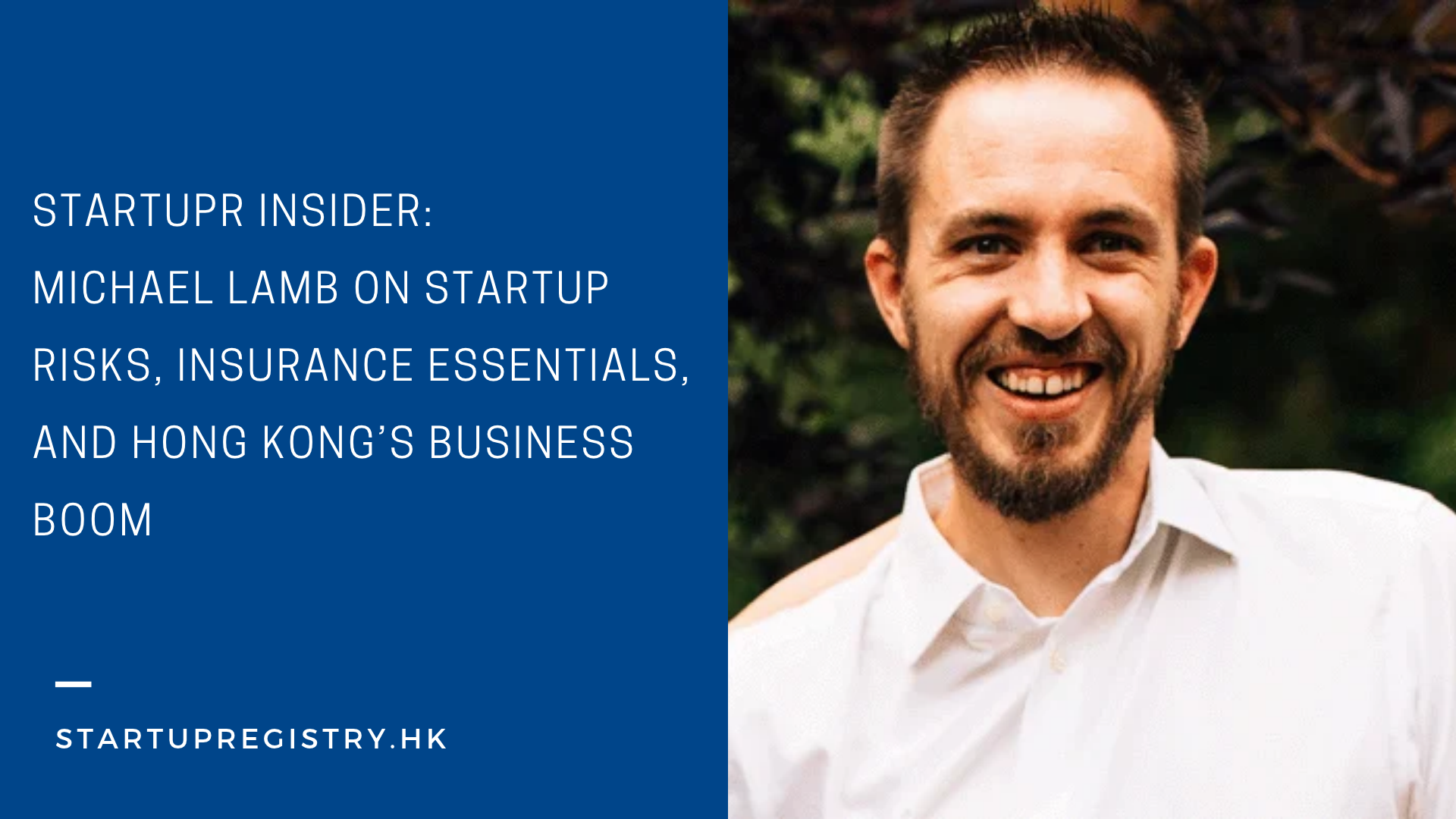
1. Michael, you’ve worked in the insurance industry in Asia since 2006. What makes Hong Kong such a great place to start a new business?
I’d say the fact that it is the perfect blend of “East-meets-West” and is situated to easily allow access to the rest of Asia. And it’s easy. In other countries, starting a company can come with no small amount of regulatory headache. But in Hong Kong, getting a business off the ground can be done fast and painlessly.
2. How would you compare the business environment in Hong Kong to other major cities around the world?
I think Hong Kong is by far more pro-business than many other global cities. If you want an example of a city that exists to do business, from single independent operators to multinational companies, then that example has to be Hong Kong. Because it is so easy to set up a company and get that company running, we’re seeing more businesses take advantage of this. In fact, according to InvestHK, we’ve had a record number of startup companies form in Hong Kong during calendar year 2025; proving how easy it is to get going and how supportive the local market is of business activities.
3. What is your top advice for overseas founders setting up their first company in Hong Kong?
Hong Kong law may be different from regulations in other jurisdictions. It is important to cover your bases and assess your risks (and gaps) before you start any company. Hiring a competent local company secretary and/or accounting firm, like Startupr, is normally a great first step.
4. At CCW Global, your slogan is “Swift, Simple, and Sorted.” Why is it so important to keep insurance easy for small businesses and startups?
Small businesses and startups have enough to worry about! From whether you’re going to be able to make payroll because your cash flow situation is tight, to thinking about a bigger office because you need to hire more staff, or even chasing an unpaid invoice that is now 15 days overdue, the decision-makers at small businesses and startups have a lot on their plate.
Insurance shouldn’t be another hassle; it should be there when you need it and cover the risks you face, but you should be able to focus on the thing that matters – your business.
5. Employee Insurance is legally required in Hong Kong. But what other insurance should new startups consider, like office coverage or public liability?
You’re right, Employees’ Compensation Insurance is required for all employers in Hong Kong (including individuals who hire domestic helpers). Many simple business packages will bundle things like Office Contents Insurance, Public Liability Cover, and Employees’ Compensation protection under a single umbrella policy. Beyond that, it really depends on the business in question. A newly established law firm would likely require Professional Indemnity Insurance (also known as errors and omissions coverage) to protect the firm from liability in relation to mistakes in their work.
A manufacturing company probably wouldn’t need that same type of PII coverage, but would require Commercial Goods Liability protection in the event that one of their products has a defect and causes damage when out in the world. No two businesses are the same, so no two businesses are going to have the same insurance portfolio.
This is where it is critical to think about your exposures. For example, if you’re interacting with members of the public coming to your retail space all day, every day, then it might make sense to look at a higher level of Public Liability protection.
6. For founders shipping products internationally, how does Cargo Insurance protect their business and cash flow from unexpected issues?
Cargo Insurance is a great way to ensure that if anything happens to your stuff while it is being sent to another destination, you will receive compensation. This is actually one of the oldest forms of insurance out there, and honestly hasn’t changed too much since the Age of Sail (500-odd years ago).
Simply put, if a covered risk (fire, explosion, collision, theft… the coverage is normally pretty broad) occurs, you will receive reimbursement under a claim. Cargo insurance does not protect you against a customer failing to pay for their order. That risk is associated with a product called Trade Credit Insurance, which can also be useful for businesses exposed to international shipping risks.
7. When should a growing startup move from basic legal insurance to adding extras like employee health benefits?
This really depends on the business in question. Some businesses want to start looking at things like Medical Insurance under an employee benefits plan as soon as they are formed, as this can be an incredibly useful way to attract (and retain) high-value employees. This is also true for startups where the only employees are the founders, and in relation to a product like Key Person Life Insurance can mean difficult, but productive, conversations for the company. How would the business manage if the Founder, COO, or CTO got hit by a bus on the way to work tomorrow? Or had a deadly heart attack. Key Person coverage normally isn’t mandated by anyone, so no one is going to ask a business to purchase it. But even at the very start, it can be invaluable in providing continuity options should something happen to a key worker in the company.
Similarly, something like Professional Indemnity Insurance (PII) may not be a regulatory requirement, but if your company is in the business of giving advice, a single claim of negligence or an error can be ruinous. So, talking about PII risks sooner rather than later may be worthwhile.
8. You recently shared that while AI is useful, it can never replace a real human expert. Why is personal advice so important when choosing insurance?
I think it’s really because an AI/LLM/Computer hasn’t lived your life, and absolutely cannot understand what things are important to a human. You could ask an AI about “startup risks in Hong Kong,” and it may be able to point you in the right direction to start your search, or tell you about the pitfalls you may encounter – but it isn’t going to be able to have a personal relationship with you or be supportive in an emergency.
We’re not saying that AI isn’t useful in managing data, or getting research started, but we have seen numerous instances of AI making mistakes; mistakes which can be critical when it is a person suffering the impact of a real-world event – events which are often traumatic and shocking… Loss impacts us! Human judgement, personal relationships (both with clients and underwriters), and actual empathy are things that an AI will never be able to replace. And all these things matter when it comes to insurance and risk. An AI cannot fight for you. A human broker at CCW Global always will.
9. Startupr helps founders launch their business, and CCW Global protects it once it’s running. How does this partnership help entrepreneurs succeed?
“Swift, Simple, Sorted.” I think this goes back to your 4th question. Both Startupr and CCW enable new companies to thrive in an environment that already makes it pretty simple to get a business going.
The partnership succeeds by taking away the guesswork and enabling founders and owners to concentrate wholly on making their companies a success – without the distractions of “oh my gosh, how are we going to pay our staff” or “oh my gosh, an employee hurt themselves, and now what?”
10. Looking ahead, what should new business owners in Hong Kong watch out for to keep their company safe?
This is a really interesting time. Technology is facilitating more connection, but also creating a lot more risk. The prevalence of AI tools and systems means that corporate IT networks are more at risk than ever of being compromised. I think the big talking point for business over the next 24 months is going to be AI-facilitated cybercrime, and how we, as companies, can better protect ourselves from the actions and consequences of those events.
Protect Your Growth with the Right Infrastructure
Building a successful enterprise in Hong Kong requires more than just a great product and a swift incorporation; it demands proactive risk management and a solid safety net. As Michael highlights, partnering with trusted professionals allows founders to cut through the administrative noise and focus on what truly matters: scaling their business.
Whether you are taking your first steps in company formation with Startupr or safeguarding your operations with CCW Global, having the right experts in your corner ensures your entrepreneurial journey remains resilient against whatever challenges lie ahead.